Mechanistic Studies on the Selective Reduction of CO2 to the Aldehyde Level by a Bis(phosphino)boryl (PBP)-Supported Nickel Complex
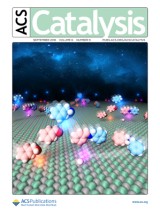
This work describes a thorough investigation of the mechanism of a highly selective hydrosilylation of CO2 to the formaldehyde level catalyzed by a bis(phosphino)boryl(PBP)Ni(II) complex in the presence of B(C6F5)3. CO2 activation by insertion into the Ni–H bond of...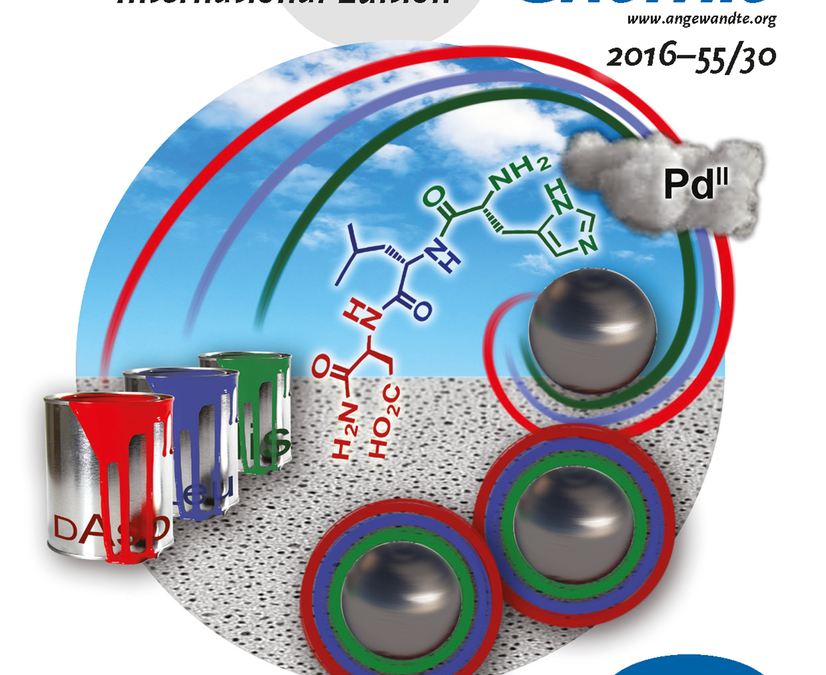
Glucose–Nucleobase Pseudo Base Pairs: Biomolecular Interactions within DNA
Noncovalent forces rule the interactions between biomolecules. Inspired by a biomolecular interaction found in aminoglycoside–RNA recognition, glucose-nucleobase pairs have been examined. Deoxyoligonucleotides with a 6-deoxyglucose insertion are able to hybridize with...
Selective reduction of carbon dioxide to bis(silyl)acetalcatalyzed by a PBP-supported nickel complex
The selective reduction of CO2 to the formaldehyde level remains an important challenge and to date only a few catalysts have been developed for this reaction. Herein, we report an efficient catalyst that consists of a bis(phosphino)boryl nickel hydride complex...
The chloroplast NADPH thioredoxin reductase C, NTRC, controls non-photochemical quenching of light energy and photosynthetic electron transport in Arabidopsis
High irradiances may lead to photooxidative stress in plants, and non-photochemical quenching (NPQ) contributes to protection against excess excitation. One of the NPQ mechanisms, qE, involves thermal dissipation of the light energy captured. Importantly, plants need...