


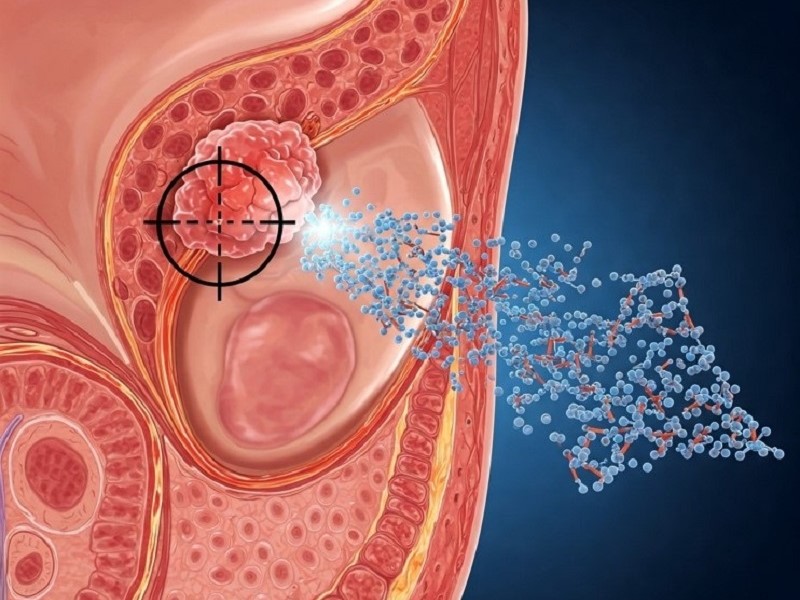
Researchers at the Institute for Chemical Research have developed two organic nanoparticles capable of specifically targeting prostate tumours and releasing an effective amount of drug to eliminate them. The results, published in the Journal of Controlled Release, represent a step towards more precise and effective cancer therapies.
Prostate cancer is a major health problem, as it is the second most commonly diagnosed malignancy and the third leading cause of cancer-related death in men. According to the World Health Organisation (WHO), one in 44 men will die from the disease.
Specifically, researchers have developed two types of organic nanoparticles, called micelles, based on polydiacetylenic materials (PDA) and equipped with a specific targeting ligand (ACUPA) for the PSMA protein, which is overexpressed in prostate tumour cells. These micelles are used to administer the drug docetaxel (DTX) in the treatment of this type of cancer, by passive and active targeting.
‘The micelles used have been designed following the latest advances in nanomedicine, optimising their size, topology and surface chemistry to selectively reach the tumour and release an effective amount of the drug with the aim of eliminating tumour cells,’ says the principal investigator of this study, Noureddine Khiar.
Conventional methods to treat this cancer, such as surgery and chemotherapy, often fail to completely eradicate tumour cells, lack selectivity and can damage healthy tissues, leading to severe side effects, drug resistance and impaired immune response.
“In response to these challenges, research is directed towards the development of advanced nanoscale drug delivery systems that enable precise delivery of therapeutic and diagnostic agents, improving selectivity and reducing adverse effects through both passive and active targeting.
Tests on mouse models
In passive targeting, nanoparticles target the tumour by taking advantage of specific features of the tumour environment, such as the increased permeability of blood vessels; however, this mechanism may lack the necessary selectivity, limiting efficient drug delivery to cancer cells. In contrast, active targeting uses a more precise mechanism, in which nanoparticles are designed to specifically interact with overexpressed receptors on tumour cells, enhancing drug accumulation in the tumour and minimising the impact on healthy tissues.
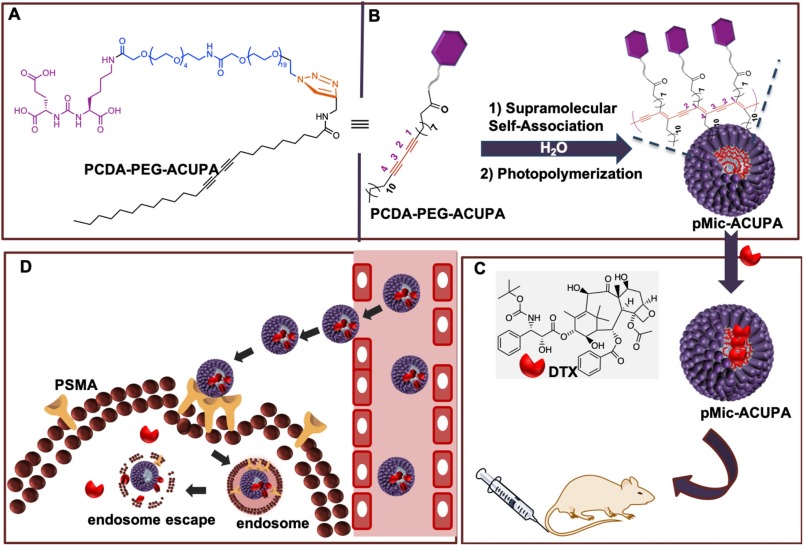
Results from preclinical studies and tests in murine models show that, not only do actively targeted micelles increase the solubility of the drug — a key factor for its therapeutic efficacy — they also achieve more efficient accumulation in tumours, significantly reducing their growth.
These initial findings suggest that the micelles we have developed could be a promising alternative for delivering chemotherapy treatments that specifically target prostate cancer cells. Furthermore, our synthetic approach has been designed to facilitate market translation.”