



A research team from the Institute of Materials Science in Seville (ICMS-CSIC-US) has developed a sheet-like nanomaterial that captures pollutants such as lead, cadmium and mercury in liquid media. This approach offers an efficient, sustainable and complementary alternative to conventional purification systems.
A research team at the Institute of Materials Science in Seville (ICMS-CSIC-US) has developed synthetic clays that remove heavy metals from water with an efficiency up to ten times greater than that of conventional materials, such as natural clays or activated carbon. This material, designed in the laboratory, retains highly toxic pollutants such as lead, cadmium and mercury, which are associated with serious health problems and are frequently found in water affected by industrial or mining activity. With these qualities, it could be applied in wastewater treatment and water reuse systems.
The novelty of the proposal lies in the fact that it does not use natural clays, but rather clays manufactured in the laboratory ‘to order’ to better capture pollutants. To achieve this, they draw inspiration from the clay’s structure—composed of layers of very thin sheets capable of trapping substances between them—and modify it to increase its adsorption capacity, much like a sponge. “This allows us to control its composition, its structure and the way it interacts with pollutants,” explains María Dolores Alba Carranza, a researcher at the ICMS-CSIC-US, to the Fundación Descubre.
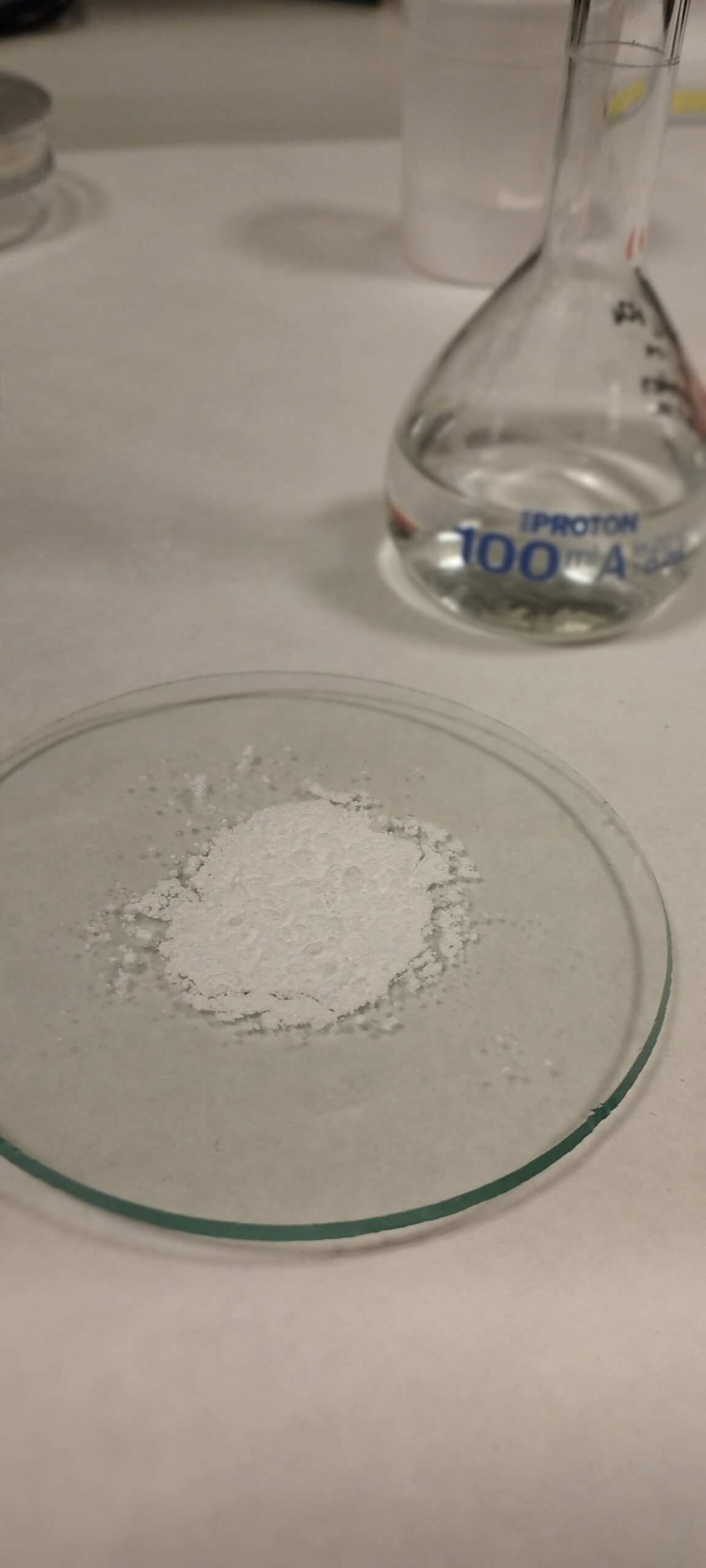
Material preparado en el laboratorio.
Heavy metals such as lead, cadmium and mercury are dangerous due to their toxicity, persistence and ability to accumulate in all kinds of organisms, including humans. For example, lead is linked to neurological damage, whilst cadmium and mercury can cause kidney problems and affect the food chain. Faced with this challenge, researchers have developed a new strategy based on materials that capture these pollutants more efficiently.
Greater capacity and better control
The results show that these synthetic clays, which function as a ‘sandwich’ of microscopic layers that trap metals inside and resemble powder, have an adsorption capacity up to ten times greater than that of other materials commonly used in water treatment. “Specifically, they achieve very high values for the capture of metals such as mercury, lead and cadmium, confirming their potential as an alternative in decontamination treatments,” says ICMS-CSIC-US researcher Francisco Javier Osuna Barroso.
As explained in the article ‘Heavy metal adsorption isotherms on tailor-made brittle micas in water treatment applications’, published in the Journal of Contaminant Hydrology, the researchers have developed these materials based on structures inspired by natural clays, but modified to improve their heavy metal capture capacity.
The process begins with the manufacture of these clays in the laboratory, combining different compounds and subjecting them to high temperatures until a solid material with a layered structure is obtained. Subsequently, they modify its surface by adding specific chemical groups that act as ‘anchor points’ for the heavy metals. In this way, the material not only traps contaminants between its layers, but also on its surface, increasing its effectiveness.
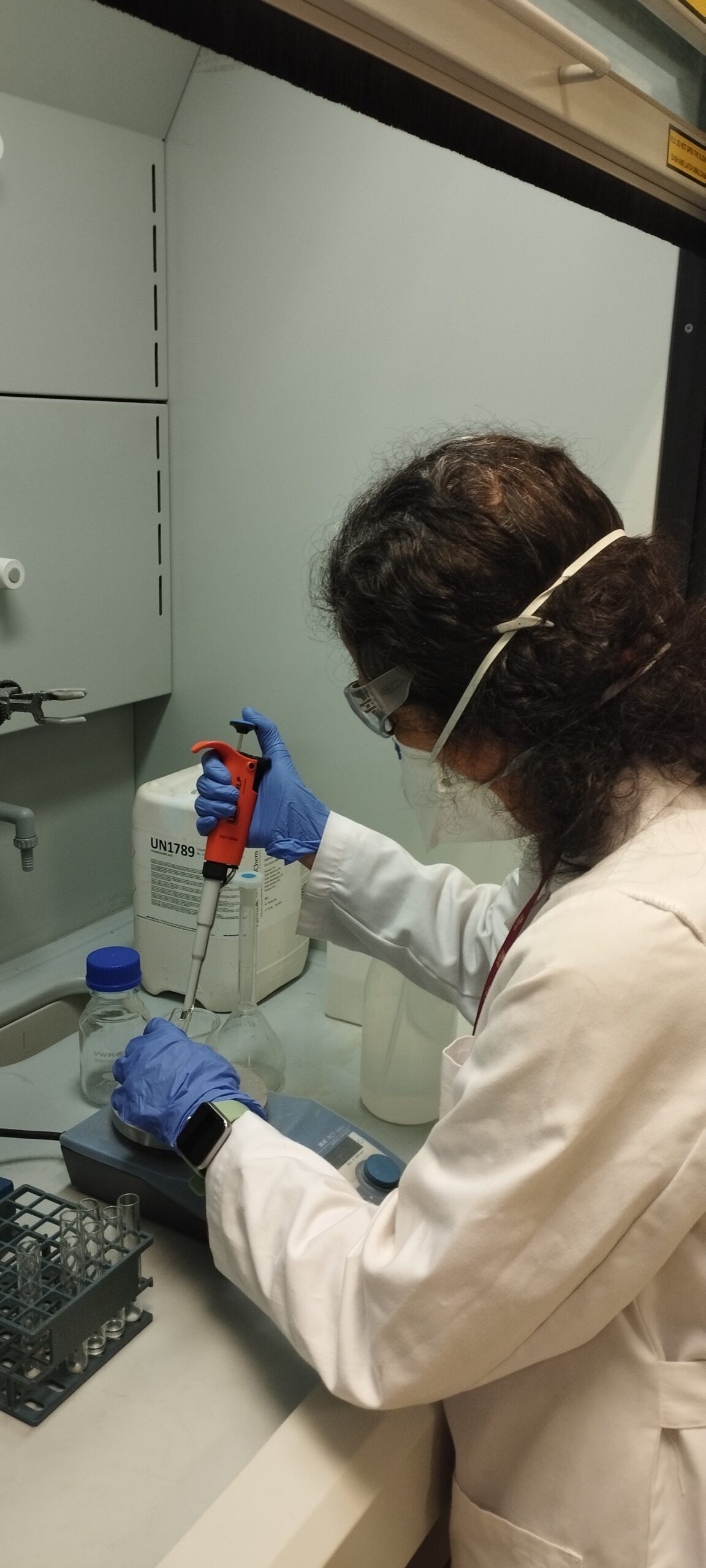
Preparación de las disoluciones de los metales pesados.
Once obtained, the researchers tested these materials in small containers of approximately 30 millilitres using solutions that simulated water contaminated with varying levels of lead, cadmium and mercury. They then measured how much of the metal was retained and analysed how this retention occurred. The results show that, in some cases, the metals adhere reversibly, as is the case with certain magnets. This would allow the material to be reused, whilst in other cases the bond is stronger.
Applications in water treatment
This breakthrough has direct applications in the treatment of contaminated water, but it can also help improve water reuse processes and reduce the impact of these pollutants on soil and aquatic ecosystems. Among the areas of improvement currently being worked on by the scientific team of the Materials for Energy and Sustainability group is the incorporation of magnetic properties, with the aim of facilitating the recovery and reuse of materials. With these improvements, this ‘tailor-made’ material could serve to reduce or eliminate other pollutants such as pharmaceuticals, solvents or pesticides.
Furthermore, the researchers note that, when integrated into materials such as membranes or coatings, these materials could be used in more advanced fields, such as nuclear energy and radioactive waste management, where it is necessary to capture and retain contaminants under extreme conditions. “This study lays the foundations for the development of more efficient and customised materials for water treatment, a very important tool for moving towards more sustainable models and better water resource management,” says ICMS-CSIC-US researcher Esperanza Pavón González.